Cat Painting Self Portrait on Easel with Creative Expression in Digital Art
The Intersection of Feline Charm and Artistic Craft
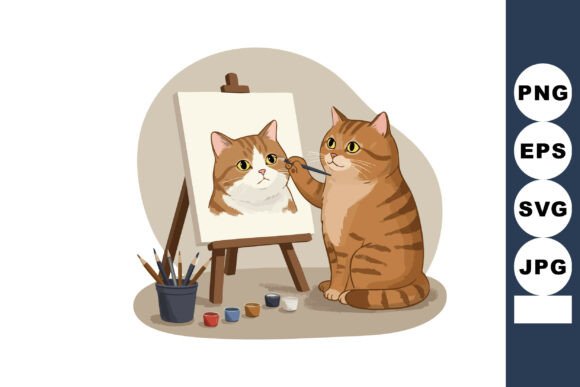
The concept of a cat painting self portrait on easel with paintbrush in paw has captured the imagination of digital artists and animal lovers alike. This whimsical image blends the natural curiosity and grace of cats with the structured world of fine art. Whether as a literal depiction or a symbolic representation of creativity, the idea of a feline artist at work resonates across cultures and artistic communities.
From illustrated storybooks to digital illustrations and vector graphics, the motif of a cat uses paintbrush to create self portrait on canvas is often used to convey themes of individuality, playfulness, and the unexpected talent of animals. In digital art and design, this imagery has been adapted into downloadable assets, including SVG, EPS, JPG, and PNG files, allowing creators to integrate this charming visual into a variety of projects—from greeting cards to branding materials.
Understanding the Visual Elements
A typical depiction of a cat painting self portrait on easel with includes a feline figure standing or sitting upright, often in a studio-like setting. The scene usually features an easel, a canvas, paint pots filled with vibrant colors, brushes scattered around, and sometimes a palette resting nearby. The cat may be shown in the act of painting, tail flicking with concentration, eyes focused on the canvas, and paws delicately holding a brush.
These illustrations often evoke a charming and creative mood, blending realism with a touch of anthropomorphism. The artistic setting enhances the visual narrative, suggesting a space where imagination and craftsmanship come together. The colors are usually warm and inviting, with soft lighting that highlights the textures of the fur, canvas, and wooden easel.
Applications Across Industries
The cat uses paintbrush to create self portrait on canvas theme is not limited to the world of illustration. It has found relevance in a variety of industries, including:
- Education: Teachers and educators use this imagery to engage children in creative writing, art classes, and storytelling. The visual encourages students to imagine narratives and explore their artistic abilities.
- Marketing: Brands targeting pet lovers or creative audiences often incorporate this motif into their campaigns. It adds a touch of personality and whimsy, making promotional materials more memorable.
- Interior Design: Prints of cats painting are popular in home décor, especially in creative workspaces, nurseries, and studios. They offer a lighthearted yet sophisticated aesthetic.
- Graphic Design: Designers use vector files of these illustrations to create logos, icons, and branding elements that communicate creativity and individuality.
Technical Aspects of Downloadable Art Files
When purchasing or downloading a ZIP file containing SVG, EPS, JPG, and PNG versions of a cat painting a self-portrait, it’s important to understand the strengths and use cases of each file type:
- SVG (Scalable Vector Graphics): Ideal for web use and scalable without loss of quality. SVG files can be edited in vector software and are perfect for logos, icons, and illustrations on websites.
- EPS (Encapsulated PostScript): A legacy vector format often used in print design. EPS files are compatible with most graphic design software and are suitable for high-quality printing.
- JPG (Joint Photographic Experts Group): A compressed raster format best suited for photographs and images with gradients. It’s widely supported but not ideal for scaling without quality loss.
- PNG (Portable Network Graphics): Offers lossless compression and transparency support. PNG files are great for digital illustrations, web graphics, and layered compositions.
Having all four formats ensures flexibility across different platforms and design workflows. Whether you're creating a website, a printed poster, or a digital illustration, the right file type will enhance the final output.
Designing with the Cat Painting Motif
Incorporating a cat painting self portrait on easel with into your design projects requires attention to context, color, and composition. Here are some practical tips:
- Color Harmony: Choose a color scheme that complements the illustration. Warm tones like ochre, sienna, and burnt umber evoke a traditional studio feel, while pastels offer a softer, more whimsical look.
- Typography: Pair the illustration with fonts that reflect its mood—script fonts for elegance, sans-serif for modernity, or hand-drawn typefaces for a playful touch.
- Layout Balance: Use the rule of thirds or symmetry to position the cat and easel within the design. Ensure the canvas and paint pots are clearly visible to maintain visual storytelling.
- Layering: In digital design, consider layering the cat illustration over a textured background, such as wood grain or canvas, to enhance depth and realism.
Cultural and Emotional Resonance
The cat uses paintbrush to create self portrait on canvas is more than a visual motif—it's a symbol of creativity, curiosity, and the joy of self-expression. Cats have long been associated with mystery and independence, and when depicted as artists, they embody the idea that inspiration can come from the most unexpected places.
This image appeals to a broad audience, from children who enjoy anthropomorphic stories to adults who appreciate subtle humor and artistic flair. It also resonates with pet owners who see their own pets’ personalities reflected in such illustrations. The emotional impact of this imagery lies in its ability to evoke both admiration for the art form and affection for the subject—the cat.
Considerations for Ethical and Authentic Representation
While the cat painting self portrait on easel with is a fictional or stylized concept, it's important to approach its use with authenticity and respect for both art and animals. Designers and creators should avoid anthropomorphizing pets in ways that misrepresent their behavior or needs. Instead, the focus should remain on celebrating creativity and imagination through a charming and lighthearted lens.
When using such imagery in educational or commercial settings, ensure that the context is appropriate and that the illustration serves a clear purpose—whether it's to inspire, entertain, or educate.
Conclusion: A Timeless Symbol of Artistic Whimsy
The enduring appeal of a cat painting self portrait on easel with paintbrush lies in its unique blend of charm, creativity, and relatability. Whether used in digital design, print media, or educational content, this motif continues to inspire and delight audiences across the world. With downloadable assets offering flexibility and quality, it's easier than ever to incorporate this beloved image into your creative projects.